As web applications expand, managing CSS styling can slow development and even affect performance. StyleX, Meta's CSS tool, helps organizations to maintain design consistency and reduce the technical burden

As web applications expand, managing CSS styling can slow development and even affect performance. StyleX, Meta's CSS tool, helps organizations to maintain design consistency and reduce the technical burden that often builds up in large codebases.
Modern web applications often comprise hundreds or thousands of components developed by distributed teams. Therefore, managing different styles across these applications presents challenges that extend beyond just ‘aesthetics’. Traditional CSS approaches struggle to address these issues at scale, leaving organizations to seek alternative solutions.
StyleX takes a different approach by generating CSS at build time. It converts JavaScript-authored styles into atomic, optimized classes. Implementing style processing in the build step removes many scaling challenges while maintaining the benefits of keeping styles close to components.
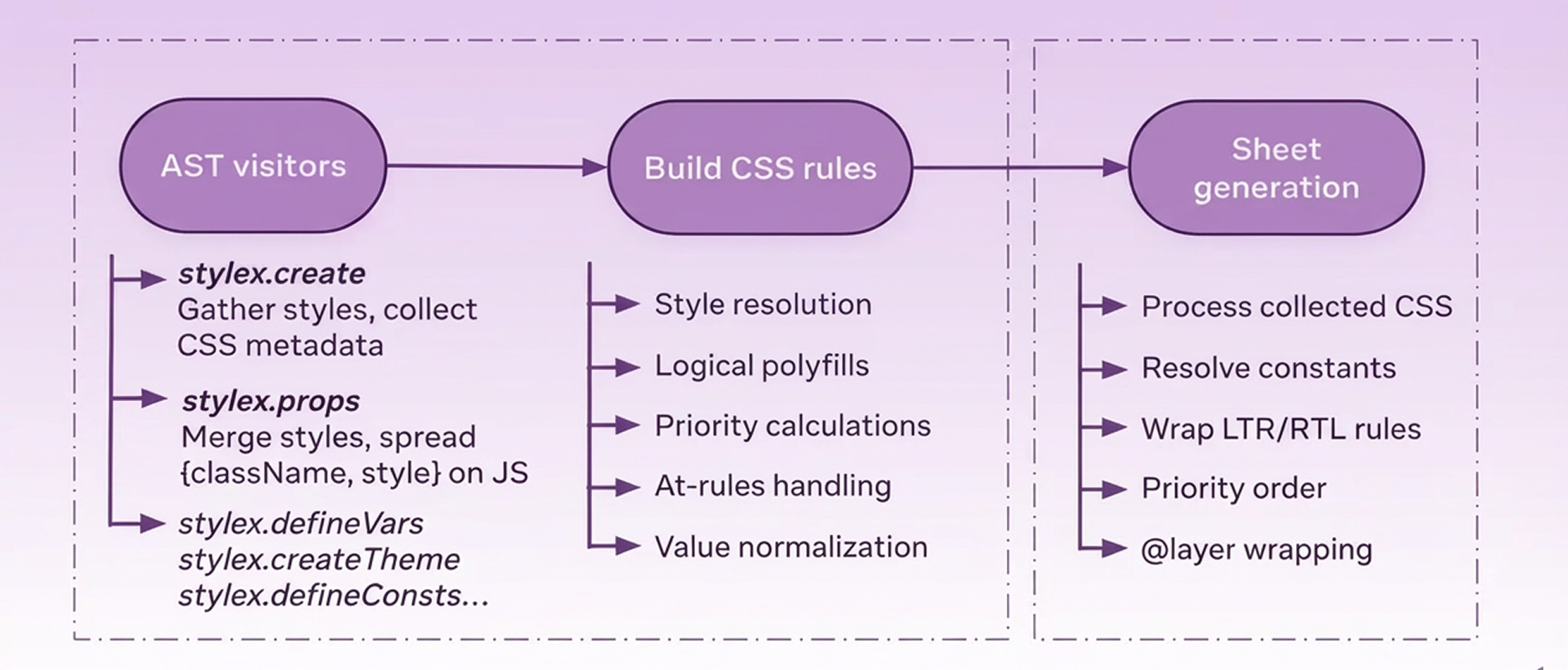
Three interconnected challenges emerge as stylesheet complexity grows.
First, namespace collisions occur when multiple teams unknowingly reuse class names, leading to unpredictable style overrides. What works in isolation breaks when integrated, requiring extensive debugging and coordination.
Second, conflicts increase as developers use complex selectors or !important declarations to resolve issues. This leads to fragile stylesheets where small changes can cause failures between unrelated components. Each workaround introduces additional technical problems, making the codebase harder to maintain over time.
Industry surveys show that developers spend considerable time resolving style conflicts and managing CSS dependencies. If approached differently, this time could be better spent on developing features or improving user experience. The key question is how organizations can systematically address CSS management challenges as they scale.
StyleX is built on three core principles to address scaling challenges.
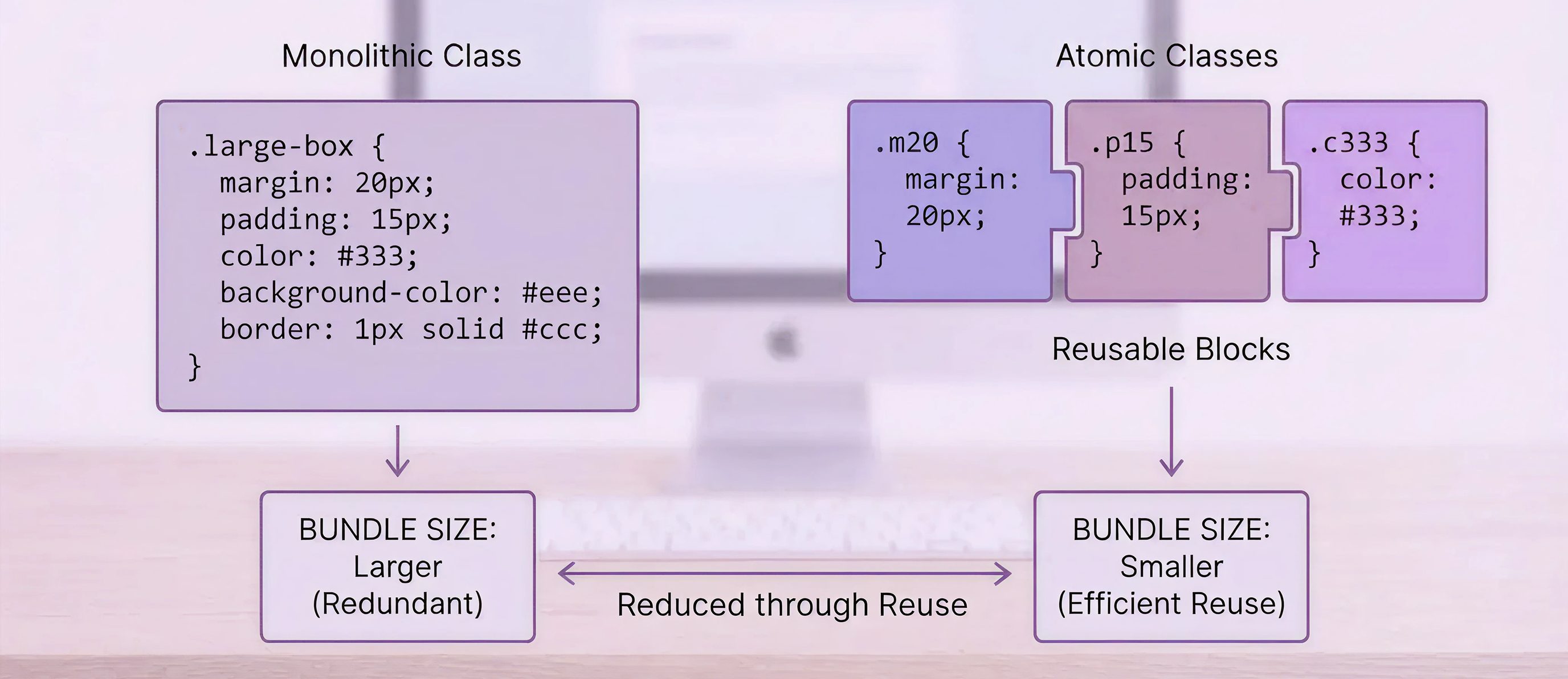
First, atomic CSS generation converts each property-value pair into a separate class, thereby reducing duplicate components. When multiple components use the same margin value, they share a single class rather than duplicating rules.
Second, build-time compilation shifts style processing from the browser to the development build. A plugin scans JavaScript files, extracts style definitions, generates optimized classes, and removes unused rules before production. This ensures only the necessary styles are shipped, which is always a plus for performance.
Third, component-colocated authoring keeps styles close to the logic. Instead of managing separate stylesheet files, developers can define styles within component modules using JavaScript syntax. This approach simplifies reworking and reduces the effort needed to track dependencies.
The practical benefits become clearly evident in implementation itself. Consider a component requiring specific margin, padding, and color values. Traditional approaches might generate component-specific classes containing all three properties for you. StyleX instead creates three atomic classes: one for margin, one for padding, and one for color that can be reused wherever those property values appear. For an application with hundreds of components, this method reduces bundle size to a considerable amount.
Dynamic values are managed using CSS variables instead of runtime style injection. When components need values determined at runtime, StyleX generates custom CSS properties that can be updated without recalculating styles. This approach keeps the performance benefits of static CSS while providing flexibility for a dynamic interface.
Large teams working in a shared codebase need clear boundaries and predictable behavior to maintain speed as they grow. StyleX's class generation and compile-time validation ensure that conflicts are caught beforehand and changes stay local rather than affecting the rest of the code.
For organizations managing design systems across multiple products, StyleX's theming capabilities prove particularly valuable. Shared design tokens, color palettes, spacing, and typography can be defined once.
StyleX fills a distinct role among styling solutions. Utility-first frameworks like Tailwind focus on manual class composition and fast prototyping. But they do not offer StyleX's automatic deduplication or type-safe style merging.
Runtime CSS-in-JS libraries offer maximum flexibility for dynamic styling. But in the meantime, it imposes performance costs through style injection while rendering. StyleX offers much of that flexibility while eliminating runtime overhead through compile-time processing. The trade-off lies in constraints around complex selectors.
.png)
For developers facing CSS complexity, such as frequent style conflicts, inconsistent design, or growing bundle sizes, StyleX provides a clear solution. Its maturity, proven by Meta's use in large-scale applications, gives confidence in its readiness for production and long-term use.
.svg)
we partner with ambitious teams to solve real problems, ship better products, and drive lasting results.
Read more Case Studies & Insights